Forrester study: Celonis process intelligence customers see payback in 6 months, 383 percent ROI in 3 years
Study provides a “comprehensive framework” for organizations to evaluate the potential financial impact of deploying the Celonis process intelligence platform
Add bookmarkListen to this content
Audio conversion provided by OpenAI

Celonis process intelligence customers see payback in as little as six months and a return on investment (ROI) of 383 percent in three years. That’s according to a new study by Forrester Consulting.
The commissioned Total Economic Impact™ (TEI) study emphasized the cost savings and business benefits companies can achieve when leveraging the Celonis process intelligence platform, experiencing benefits of US$44.1 million.
The study is designed to provide a “comprehensive framework” for organizations to evaluate the potential financial impact of deploying Celonis, the vendor stated.
Join the PEX Network community

Don't miss any news, updates or insider tips from PEX Network by getting them delivered to your inbox. Sign up to our newsletter and join our community of experts.
Learn MoreThe benefits of Celonis process intelligence
Based on interviews with Celonis customers, Forrester developed a composite organization to illustrate the quantified benefits, which include significant cost savings across various business functions, according to a press release.
For example, the organization achieved $24.5 million in savings by increasing its automation rate for sales orders. With Celonis, the number of orders processed without human intervention saw a significant 53 pp improvement (33 percent to 86 percent).
“Today’s organizations are under immense pressure to maximize efficiency, reduce costs and accelerate value realization,” said Carsten Thoma, president and board director at Celonis. “We believe these findings quantify the significant impact that our process intelligence platform has on achieving these critical objectives and delivering continuous operational improvement.”
Register for All Access: Revolution in Process Intelligence APAC 2025!
The growth of process intelligence
Process intelligence is a growing workflow automation category that facilitates the collection, visualization and analysis of operational data to provide deep insights into how processes are performing and identify areas for improvement.
Closely linked to more basic concepts such as process mining and process discovery, process intelligence builds on the visibility such endeavors provide to capture deeper value hidden in processes, enabling more informed decisions.
The process intelligence market has seen significant growth in the last few years, transforming equally as fast with new entrants emerging with fresh approaches to gathering information and analyzing how people work.
Some of the world’s biggest and well-known brands use process intelligence to drive business value. These include organizations such as Siemens, Emerson and Teva Pharmaceuticals.
“Process improvements at large enterprises require transparency and collaboration among all teams involved,” Forrester stated. “As process intelligence technologies like process mining and modeling mature, enterprises are increasingly using these technologies to make their processes work.”
Leaders expect to deliver process improvements at scale through enhanced process transparency, modeling and orchestration among contributing teams, while also exploring and enabling advanced artificial intelligence (AI) use cases with process intelligence, Forrester added.
The Business Transformation World Summit's Failure Case Study Bundle
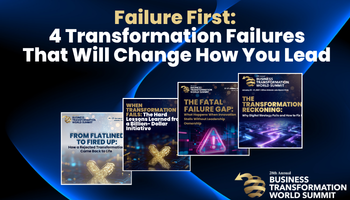
Transformation doesn't fail quietly. It fails in missed targets, stalled programs, frustrated teams, and strategies that looked perfect on paper but didn't survive reality – and yet, most leaders are still only hearing the success stories.
The Business Transformation World Summit's Failure Case Study Bundle brings together four candid, real-world transformation failures from experienced senior leaders who have been in the room, made the decisions, and seen what happens when things don't go to plan.
No polish. No hindsight bias. Just honest insight into what went wrong, and what they would do differently:
Download the bundle now and learn the valuable lessons most leaders only discover too late – and so you don't make the same mistakes they did.
Download Now