Google cracks down on remote work to enhance innovation & problem-solving
Google continues to downsize teams to streamline operations and prioritize spending on AI
Add bookmarkListen to this content
Audio conversion provided by OpenAI


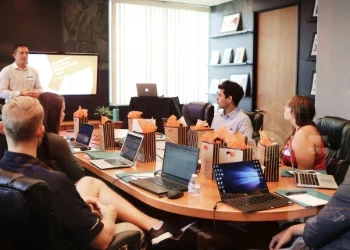
Google is demanding that some remote employees return to the office in a bid to improve in-person innovation and complex problem-solving.
Several units within Google have notified remote workers that their jobs will be in jeopardy if they don’t attend the office three days a week.
The move comes as the company continues to downsize various teams to streamline operations and prioritize spending on artificial intelligence (AI) and infrastructure.
Join the PEX Network community

Don't miss any news, updates or insider tips from PEX Network by getting them delivered to your inbox. Sign up to our newsletter and join our community of experts.
Learn MoreGoogle shifting investment to AI
At the beginning of 2025, Google began offering some US employees voluntary buyouts, telling select remote workers it would be their only option if they didn’t return to the nearest office at least three days a week, reported CNBC.
The latest threats come as Google and many of its tech peers slash costs while simultaneously pouring money into AI – which requires hefty expenditures on infrastructure and technical talent.
Courtenay Mencini, a Google spokesperson, said the decisions around remote worker return demands are based on individual teams and not a companywide policy.
“As we’ve said before, in-person collaboration is an important part of how we innovate and solve complex problems,” Mencini said in a statement to CNBC. “To support this, some teams have asked remote employees that live near an office to return to in-person work three days a week.”
As of the end of 2024, Google had about 183,000 employees, down from roughly 190,000 two years earlier.
Remote working builds more inclusive workplaces
Speaking at All Access: Digital Transformation in HR, Cherise Crenshaw-Holmes PhD, diversity, equity and inclusion (DEI) leader and founder of Modern Work Consultancy, reflected on the benefits of remote/flexible working and how it helps build more inclusive workforces.
“For black women in particular – because of that intersectionality of being a woman and being black – there are certain [negative or potentially harmful] experiences we have in the workplace that we no longer experience when working remotely,” Crenshaw-Holmes said. These include things like micro-aggressions – questions about descent/place of birth or people “touching your hair,” she added.
“Honestly, those microaggressions are like ‘death by a thousand papercuts’ because they don’t seem big in the moment, but when you experience them over and over again, the compound effect begins to have an impact on that particular employee.”
Remote work – even if it is hybrid – can have a significant impact on the wellbeing and overall feeling of belonging for all employees, not just women of color, Crenshaw-Holmes said.
Watch the full session and learn how to help employees feel they belong in the age of AI and other advanced technology
All Access: BPM 2026

All Access: BPM 2026 from PEX Network will help professionals get an understanding of the latest developments in BPM, including how to identify and improve key processes, how to implement BPM technology, and how to measure the success of BPM initiatives.
Register Now