Exchange Day One - April 28th
7:30 am - 8:25 am
EVENT REGISTRATION
7:30 am - 8:25 am
BREAKFAST WORKSHOP: Flying the Enterprise Through Constant Change: The New Skills of the CTRO
The role of the Transformation Officer is evolving.
Business change is no longer a series of discrete programs with a defined start and end. Enterprises are navigating multiple priorities at once, often while the business itself continues to evolve. As a result, transformation leaders are increasingly becoming the enterprise air traffic controllers, creating visibility across the organization, orchestrating competing priorities, spotting emerging risks, and helping their fellow leaders make faster, smarter decisions.
The shift in the role is fundamental. Today's transformation leaders are no longer simply managing individual transformation initiatives; they are orchestrating the very system in which change happens.
But what does this mean for the skills a Transformation Officer needs, particularly when they rarely have direct authority over the change they are expected to deliver? How do they work effectively with other members of the C-suite when priorities compete, resources are constrained and everyone has a different view of what needs to happen next? This interactive breakfast session will explore the skills and relationships that enable transformation leaders to create momentum in an environment of constant change.
Together, we will explore the capabilities today's CTROs need to build and strengthen, discussing how to become:
- Visionary leaders and change coaches who challenge conventional thinking, create a compelling direction and give people the confidence to be bold.
- Enterprise orchestrators who see the whole system, connect initiatives and navigate sequencing across the organization.
- Influencers and strategic relationship builders who create alignment across teams, build trust and generate momentum without relying on formal authority.
8:30 am - 8:35 am
EXCHANGE WELCOME: Nikki Kandola, Event Director
8:35 am - 8:45 am
CHAIRPERSON'S OPENING ADDRESS
8:45 am - 9:15 am
OPENING PANEL DISCUSSION: Beyond People, Process & Technology: The Rise of the Decision Layer
Dion Baker -
VP, Enterprise Transformation & Strategic Execution,
Wells Fargo
Aurelia Valot Fiederer - Vice President, Global Business Transformation, Sodexo
For more than a decade, the ambition of transformation has remained remarkably consistent: greater productivity, increased efficiency, and the ability to deliver at scale.
What has changed is the technology available to achieve it. From cloud and automation to data and now agentic AI, each wave of technology has promised to fundamentally reshape how organizations operate. Yet, despite this extraordinary technological progress, many enterprises continue to struggle to translate transformation ambition into sustained business outcomes.
In this opening panel discussion, our experts explore whether the answer to sustained transformation lies in going back to basics, starting with the outcomes we are trying to achieve, creating strategic alignment around them, and then making better decisions about people, process, and technology.
We explore the augmentation of the traditional golden triangle of people, process, and technology with a fourth layer: decision intelligence. This is a new era of transformation centered on a fundamental question:
Are we making the right decisions, at the right time, at the right level, and at the right speed?
The future of transformation is not simply about doing more with technology. It is about making better decisions about what to do in the first place. The organizations that succeed in this new era will be those that can translate strategy into outcomes, outcomes into decisions, and decisions into action, continuously.
Join the conversation as we question:
- Is the traditional people, process, and technology model becoming redundant? Or is it being augmented by a fourth layer: decisioning?
- What exactly is decision intelligence and how do we embed this new layer within our organizational culture?
- What capabilities, governance, and technologies are required to make better decisions and turn them into action?




9:15 am - 9:45 am
INTERACTIVE DISCUSSION: Are Change Managers a Relic of the Past?
Sanjay Thirumalai -
Chief Transformation Officer,
Stout
Adam B Schreiber - Sr. Director, Transformation & Change Communications, Pepsico
Paul Cocuzzo - Vice President, Supply Chain & Operations Transformation, Kenvue
Crystal Broj - Enterprise Chief Digital Transformation Officer, Medical University of South Carolina
The pace of change has never been faster. While you are trying to embed AI, your people are hearing competing narratives about AI taking jobs. While you are asking teams to adopt new ways of working, they are navigating uncertainty about the economy and geopolitics.

Medical University of South Carolina

As an enterprise leader, you may control the transformation, but you don't control the context in which people experience it.
This raises the questions: what happens when the pace of change exceeds an organization's ability to absorb it? Do we need to rethink change management entirely? Have we moved beyond the idea that change is something delivered by specialist change managers, towards a world where every manager needs to be a change leader?
Join this interactive debate as we explore whether the future of transformation is human-managed change, and why all managers are change managers is no longer simply a slogan, but increasingly an operating reality.
We invite all delegates to share their perspectives as we question:
- Is traditional change management broken? What assumptions about transformation, adoption and resistance no longer hold in an environment of continuous change?
- Do we still need specialist change managers? What should remain a specialist discipline, and what should become a core leadership capability?
- What does more human transformation look like? How do we create space for uncertainty, meaning, trust and learning while still delivering at pace?



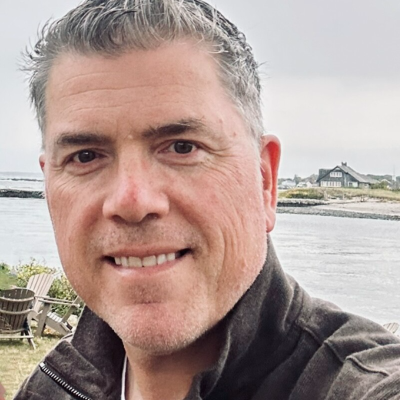

Crystal Broj
Enterprise Chief Digital Transformation OfficerMedical University of South Carolina
9:45 am - 10:00 am
ENTER THE TRANSFORMATION CONTROL TOWER: Speed Networking for Transformation Leaders
In this fast-paced networking game, each participant will receive a transformation flight card containing a challenge, priority or scenario. Your mission is to move around the room, meet other transformation leaders and route your challenge through the transformation control tower.
How it works
1. Take your flight card: You will receive a card representing a transformation challenge
2. Take off: Move around the room and find another transformation leader. You'll have a short, timed conversation to compare how you would approach the challenge on your cards.
3. Exchange and connect: At the end of each round, exchange cards and move on to a new conversation. Your new card gives you a different challenge to explore with the next person.
Your objective: Make new connections, exchange practical ideas and discover how others would navigate the same turbulence.
10:05 am - 10:35 am
ONE-TO-ONE BUSINESS MEETINGS AND NETWORKING
10:05 am - 10:35 am
CLOSED DOOR SESSION: Stop Waiting for the Big Win - Finding Value in the Smallest AI Opportunities
Crystal Broj -
Enterprise Chief Digital Transformation Officer,
Medical University of South Carolina
Many organizations are looking for the big AI transformation, the high-profile deployment, the enterprise-wide program, the initiative that promises to fundamentally change how the organization operates. But 95% of these high-profile AI projects are failing.
Medical University of South Carolina
The reality is that AI transformation doesn't always start with a big win. Sometimes, it starts by solving one small problem that people deal with every day. Whether it's improving staff efficiency, saving time, or removing the daily frustrations that quietly eat away at productivity, these small wins can have an outsized impact.
In this closed-door session, we'll explore why transformation leaders should look beyond the big AI program and start identifying the smallest opportunities that can create meaningful value now.
Join us to discuss how to:
- Find the friction hiding in plain sight and identify the everyday tasks that teams have simply learned to live with, but where AI could make a meaningful difference.
- Turn small opportunities into fast wins by focusing on use cases that can demonstrate tangible value in weeks rather than years.
- Build AI leadership muscle and recognize that successful AI adoption isn't just about deploying technology. It's about developing the leadership capability.
Crystal Broj
Enterprise Chief Digital Transformation OfficerMedical University of South Carolina
10:40 am - 11:10 am
ONE-TO-ONE BUSINESS MEETINGS AND NETWORKING
10:40 am - 11:10 am
CLOSED DOOR SESSION: Move Fast, Govern Smart: How Transformation Leaders Can Govern AI Without Killing Innovation
In a world defined by disruption and continuous change, governance is no longer simply about control. It is about creating clarity amid complexity and building organizations capable of transforming not once, but continuously.
Increasingly, transformation leaders are recognizing that the organizations gaining the greatest value from AI are not necessarily those deploying it the fastest, but those establishing the right governance foundations to scale responsibly over the long term. Poor governance doesn't simply create compliance risks, it can erode trust in AI, slows adoption and ultimately limit enterprise value. Without effective governance, every idea can look important, every project can become urgent, and organizations can become busy instead of effective.
Join this interactive workshop as we explore a critical leadership question: How do you create enough governance to protect the organization without creating so much governance that people stop innovating?
Key talking points include:
- Building governance that enables, rather than blocks, innovation and how leaders can create proportionate guardrails that allow low-risk experimentation
- Moving beyond governance for individual projects and creating a framework that works across multiple teams
- Ensuring governance keeps pace with the speed at which AI is being adopted across the organization
11:15 am - 12:00 pm
PANEL DISCUSSION: Scaling Beyond Pilots: What Gets Funded, What Gets Scaled, What Gets Killed?
AI has earned its place in enterprise budgets. The harder question is whether it can earn its place in the enterprise operating model. While most organisations are experimenting with AI, many are still struggling to move from pilots to meaningful, enterprise-wide value. For transformation leaders, the question is no longer should we adopt AI? but how do we turn fragmented AI initiatives into scalable business value?
This requires a shift from treating AI as a collection of tools to treating it as an enterprise capability that is changing how work gets done, how decisions are made and who owns the outcomes. As organizations move beyond structured back-office use cases into the middle and front office, the challenge becomes greater as processes are less predictable, decisions are more complex and the impact on customers and employees is greater.
This session explores three critical questions when thinking about scaling your AI transformation from back to middle and front office operations:
- What gets funded: How do leaders identify AI initiatives with a credible path to business value?
- What gets scaled: What does it take to move from a successful pilot to an enterprise capability, including process redesign, human oversight, governance and ownership?
- What gets killed: How do organisations stop initiatives that fail to deliver sufficient value, cannot scale or create unacceptable risk?
12:00 pm - 12:30 pm
KEYNOTE: The Accountability Era: When AI Adoption Isn’t the Problem but Proving the Value Is
AI is rapidly moving from pilot projects and experimentation to enterprise-wide adoption. As investment grows, however, transformation leaders are facing a new challenge of proving that AI is delivering measurable business value.
Today, the question is no longer simply, Where can we use AI? but rather, Where should we invest, and how do we measure the return?
For global enterprises, this becomes even more complex. Cost structures, labor models, regulatory environments, and operational realities vary across markets. An AI initiative that delivers attractive ROI in one country may not make economic sense in another. In this session, we explore how senior transformation leaders can move from AI enthusiasm to AI accountability by establishing the metrics, governance, and investment discipline needed to turn AI from a budget line item into sustainable business value with ROI.
What We'll Explore:
- Measure what matters: How do we measure the full business impact of AI?
- Thinking globally, acting locally: How can organizations balance global scalability with local economics?
- Forecast and govern value: AI economics don't end when a solution goes live. We will discuss the KPIs and governance mechanisms that give leadership teams a credible view of their AI investment portfolio
12:35 pm - 1:05 pm
ONE-TO-ONE BUSINESS MEETINGS AND NETWORKING
12:35 pm - 1:05 pm
CLOSED DOOR SESSION: The Six-Month Strategy Problem
Jeff Mayer -
Chief Operating Officer,
Michael Best
Transformation is critical to building long-term resilience, agility, and sustainable growth. But how do enterprises make transformation decisions when technology is evolving faster than their strategy cycles?
Traditional transformation programs are often built around multi-year roadmaps and fixed technology assumptions. Yet the AI landscape can change dramatically within six months, creating the risk that yesterday's strategic decision becomes tomorrow's constraint.
The answer isn't to abandon long-term strategy. It's to design strategy differently by establishing a clear direction and business outcomes while creating enough flexibility to adapt as circumstances change. This closed-door session brings together transformation leaders for a practical discussion on how to build strategies that remain relevant even when the assumptions underpinning them continue to evolve.
Join this session as we discuss:
- How transformation leaders can balance the need for long-term direction with a technology landscape that can shift dramatically within months.
- Which strategic decisions should remain stable and which choices should be deliberately designed to change.
- What a future-ready transformation strategy looks like when we accept that some of its underlying assumptions will inevitably become obsolete.

1:05 pm - 2:05 pm
NETWORKING LUNCH
2:10 pm - 2:40 pm
ONE TO ONE BUSINESS MEETINGS AND NETWORKING
2:10 pm - 2:40 pm
SHOW AND TELL
Looking for feedback on something you are working on?
Let us pair you up with a fellow transformation leader and take 15 minutes each to discuss an initiative you are working on, which you are seeking input on.
2:45 pm - 3:30 pm
PANEL DISCUSSION: Transformation Starts with Data, Not Technology
Up to 70% of digital transformation initiatives fail to achieve their intended outcomes. One recurring challenge is data quality. Across enterprises, critical data is often fragmented, duplicated, incomplete, inconsistently formatted, or trapped in legacy systems. Poor data quality can undermine even the most ambitious transformation program. When the foundations are not right, adding more technology does not necessarily accelerate transformation program. It often makes existing data problems more complex.
As a result, transformation leaders should no longer ask What technology do we need to enable transformation? Instead, they need to question is our data ready for transformation?
In this panel discussion, we will explore what data is needed to enable transformation, and how to make it fit for purpose. We will discuss why data, integration, and architecture need to be treated as core transformation enablers, not back-end concerns.
Join us to explore how to get your data ready for transformation by:
- Identifying the critical data required to support transformation outcomes and making data quality a business responsibility, not simply an IT issue.
- Creating trusted, structured, and connected data by addressing duplication, incomplete records, inconsistent formats, and fragmented data sources.
- Designing data integration into transformation strategies from the beginning ensuring data can move seamlessly across platforms and processes.
3:30 pm - 4:00 pm
KEYNOTE: FOBO - Fear of Becoming Obsolete, The Workforce Transformation Challenge
Your Biggest Transformation Risk Isn't Technology. It's Your People. AI can be purchased, deployed and implemented. However, a workforce that is confident, capable, and ready to use new technology effectively cannot be simply switched on.
Every transformation ultimately happens through people. Yet organizations often invest heavily in technology while underinvesting in the human capabilities required to turn that technology into business value. A one-day training session before go-live does not create lasting capability. People need time to practice, build confidence and learn how to exercise judgment in an increasingly AI-enabled workplace.
There is also another challenge that transformation leaders need to confront: FOBO which is the Fear of Becoming Obsolete. As AI and automation reshape roles, responsibilities, and ways of working, employees are asking a fundamental question: What does this mean for my role?
This fireside chat will explore how transformation leaders can put people at the heart of transformation by building the confidence and a culture that can turn AI investment into sustained business performance.
Join us as we explore:
- FOBO and uncertainties employees experience as roles and skills evolve, and the importance of giving employees a clear understanding of how their career opportunities can evolve.
- How leaders can create the conditions for people to embrace new technologies, build new capabilities, and adopt new ways of working.
- Why workforce capability needs to be built continuously through practice, coaching and real-world application, not treated as a one-time training event.
4:05 pm - 4:35 pm
ONE TO ONE BUSINESS MEETINGS AND NETWORKING
4:05 pm - 4:35 pm
INTERACTIVE WORKSHOP: Sustaining Performance Through Transformation
For most organizations, transformation happens while the business is still expected to perform. Customers still need to be served, revenue needs to be delivered and operational commitments still need to be met.
Yet most commercial enterprises are not designed to accommodate transformation as an ongoing activity. They are designed to execute an established business model efficiently. So, how do you change the organization without disrupting its ability to perform?
For transformation leaders, sustaining performance is not simply about managing resistance to change. It is about protecting the organization's capacity to deliver today while deliberately creating the capacity required for tomorrow. In this interactive workshop, senior transformation leaders will explore how organizations can maintain momentum, stability, and performance through periods of significant internal and external disruption.
We will explore how to transform for tomorrow while performing today, with a focus on:
- Consistent leadership and clear communication that create confidence, clarity, and focus when the organization itself is changing.
- Protecting the core while changing the system. We discuss how organizations retain the values, capabilities, customer commitments, and operational disciplines that underpin current performance
- Structured change management that prevents transformation from overwhelming the organization and ensures people have the time, capability, and support to deliver both the transformation and the day-to-day business priorities.
4:40 pm - 5:10 pm
ONE-TO-ONE BUSINESS MEETINGS AND NETWORKING
5:15 pm - 5:45 pm
ONE-TO-ONE BUSINESS MEETINGS AND NETWORKING
5:15 pm - 5:45 pm
CLOSED DOOR SESSION: Overcoming Fatigue on the Frontline Through a Human-Centered Approach to Change
AI, restructuring, new operating models, and relentless shifts in the external environment mean organizations are asking people to adapt more frequently than ever. Today's enterprises are often running multiple transformation programs simultaneously, sometimes without sufficient coordination or prioritization, creating significant pressure on employees and leadership teams alike. People managers are expected to absorb and navigate the impact of constant change, often without the tools, capabilities, or capacity to do so. According to research by Emergn, 50% of employees have considered leaving their jobs because of constant change.
This relentless pace can lead to transformation fatigue. Too much change too quickly, competing priorities, unclear communication, and insufficient support or training can all contribute to transformation fatigue.
Join this closed-door session to explore practical, human-centered strategies that transformation leaders can use to reduce fatigue.
We'll explore how leaders can:
- Make change manageable by being explicit about what people need to learn and adopt now, what can come later, and what they can stop doing.
- Sequence transformation with capacity in mind by creating space for prioritization and reflection
- Put people at the center of transformation by designing change around how people actually experience, absorb, and sustain new ways of working.
5:45 pm - 6:30 pm
DISCUSSION GROUPS: What is Keeps You Awake at Night?
Six tables. Six thought-provoking questions. Join your pre-selected discussion group for an open, conversation about the pressing challenges that keep you thinking long after the day is done.
5:45 pm - 6:30 pm
TABLE 1: Scale - How do we scale what actually works?
5:45 pm - 6:30 pm
TABLE 2: Strategy - How do we plan when the technology keeps moving?
5:45 pm - 6:30 pm
TABLE 3: Trust - How do we transform without destroying trust?
5:45 pm - 6:30 pm
TABLE 4: AI Governance - How do we control AI without killing innovation?
5:45 pm - 6:30 pm
TABLE 5: Forecasting and Budgeting for Rising AI Costs


