Exchange Day Two - 29th April
7:30 am - 8:25 am
EVENT REGISTRATION
8:30 am - 8:40 am
OPENING ADDRESS
Madhavi Pokkuluri -
Sr. Director, Transformation, Post-Merger Integrations & Process Excellence,
Solstice Advanced Materials

Madhavi Pokkuluri
Sr. Director, Transformation, Post-Merger Integrations & Process ExcellenceSolstice Advanced Materials

8:40 am - 9:10 am
OPENING PANEL DISCUSSION: Who Actually Owns Transformation?
There's a moment, often subtle, when an organization shifts from believing its challenges are temporary to recognizing that something more fundamental must change. That realization can emerge from repeated failures despite seemingly strong initiatives, mounting pressure from customers, investors, and stakeholders, or the growing recognition that yesterday's operating model simply won't deliver tomorrow's results.
But when transformation becomes mission-critical, who actually owns it? Is it the CEO, who sets the strategic direction and holds the organization accountable? The CIO, who enables transformation through technology and data? The COO, who turns strategy into operational change? The Chief Transformation Officer, whose mandate is to orchestrate change across the enterprise? Or does ownership ultimately sit with the leaders and teams on the front lines, who must make transformation real through their everyday decisions and behaviours?
And if transformation is everybody's job, does it risk becoming nobody's responsibility?
One thing is clear, disruption isn't letting up. Transformation fatigue isn't going away and organizations cannot afford to treat transformation as another temporary program. The real challenge is not simply deciding who owns transformation but understanding where accountability sits and how leadership creates the conditions for change to happen at scale.
During this panel discussion, we question:
- Who should ultimately be accountable for enterprise transformation?
- Where does transformation leadership end and business ownership begin?
- Can a Chief Transformation Officer successfully lead transformation without direct authority over the business?
9:10 am - 9:40 am
KEYNOTE: The Plug – and – Play Myth
Buying technology is the easy part. Creating the conditions for transformation is the real work. Today, organizations are investing heavily in AI and other emerging technologies, yet many are still struggling to turn those investments into meaningful business outcomes.
The problem isn't necessarily the technology. It's the assumption that transformation can be delivered like a software installation: buy the technology, deploy it across the organization, train people to use it, and wait for the value to appear.
But technology transformation isn't plug-and-play.
In this keynote, we explore why significant technology investment does not automatically translate into transformation and what leaders can do differently to move beyond deployment toward sustained adoption and lasting business value.
Join us to explore three leadership shifts that can make the difference:
- Move from deployment to ownership by giving teams greater autonomy to identify where technology can create value and take ownership of how it is applied.
- Make experimentation part of transformation by creating the space, permission, and support for people to experiment, learn, and adapt technology to their real-world context.
- Build the capability to scale by creating the leadership support, organizational capabilities, and infrastructure needed to turn local experimentation into sustained, workforce-wide transformation.
9:40 am - 9:50 am
PODCAST POP-IN
9:55 am - 10:25 am
ONE-TO-ONE BUSINESS MEETINGS AND NETWORKING
9:55 am - 10:25 am
CLOSED DOOR SESSION: Integrating Legacy Systems: What to Watch Out For
Many organizations are seeking to layer modern technologies onto technology estates that were never designed to support them. Decades of fragmented applications and inconsistent data architectures can slow innovation, increase implementation complexity, and make transformation initiatives harder to scale.
Yet legacy systems often remain critical to how an organization operates. Replacing them outright can be disruptive and risky. Effective integration provides an alternative, enabling organizations to build on existing technology investments while introducing new capabilities that improve efficiency.
The challenge, however, is getting the balance right. How do you integrate new technology with established systems without creating another layer of complexity?
In this session, we will explore the benefits and challenges of integrating legacy systems, what Chief Transformation Officers should watch out for, and the practical steps that can help organizations integrate new technologies successfully.
We will explore a four-stage approach:
- Understand what you have before deciding what to change.
- Design the integration around the business outcome.
- Develop and test in a controlled environment.
- Deploy, monitor, and continuously improve.
10:30 am - 11:00 am
ONE-TO-ONE BUSINESS MEETINGS AND NETWORKING
10:30 am - 11:00 am
CLOSED DOOR SESSION: Transforming at Speed: Balancing Speed with Responsible Execution
There are two speeds in every transformation, the speed the business needs to move and the speed at which people can adapt and commit.
Competitive pressure, board expectations, and rapid technological change have created an urgency that many transformation leaders describe as both necessary and dangerous. Organizations recognize the need to accelerate transformation, but they also understand that poorly executed change can be more damaging than moving too slowly. The challenge is finding the right balance between speed, governance, and organizational readiness.
Join this session for an open discussion around the magic triangle of speed, governance, and readiness, exploring how transformation leaders can balance all three in a fast-paced environment.
Key takeaways include:
- Knowing when to move fast and when to slow down. Identify which decisions can be accelerated and where additional governance, testing, or stakeholder engagement is essential.
- Understanding organizational readiness. Recognize that technology can move faster than people. Explore how to assess whether teams are ready to adopt and sustain change.
- Creating momentum without sacrificing quality. Consider how to use iterative delivery, rapid experimentation, and shorter feedback cycles to accelerate transformation while managing risk.
11:00 am - 11:35 am
ONE-TO-ONE BUSINESS MEETINGS AND NETWORKING
11:40 am - 12:10 pm
PANEL DISCUSSION: The Death of Transformation Projects. Long Live the Transformation Engine
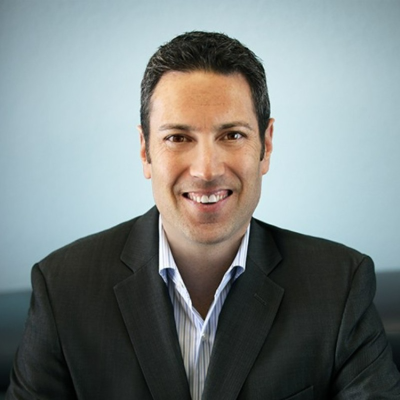
Sam Berman -
Head of Transformation,
Aptia
Across virtually every industry, unprecedented disruption and market turbulence are challenging established business models and ways of working. Organizations are being asked to respond faster and at greater scale than ever before. Yet many enterprises are still approaching transformation as a project by establishing a program, creating a transformation office, setting targets, and driving adoption.
However, this model is increasingly reaching its limits and becoming obsolete.
When the environment is continually changing, transformation cannot be something an organization does and then finishes. It needs to become something the organization is capable of doing continuously. In this session, we explore how to normalize always-on transformation, making change a fundamental part of the organization's DNA rather than a series of discrete initiatives.
We will explore the importance of the following six steps for building an always-on transformation engine:
- Embedding change management
- Inspiring through purpose
- Sustaining employee energy
- Building pivotal capabilities
- Establishing an agile culture
- Encouraging a learning mindset
12:10 pm - 12:40 pm
THE GREAT TRANSFORMATION DEBATE
Time to take a stand.
We're breaking from the script for an interactive debate designed to challenge assumptions and spark fresh thinking. We'll put 8 polarizing statements to the room. Your job? Pick a side, sharpen your argument with your team, and go head-to-head with the opposition.
The conversation doesn't stop when the session ends, take the debate into lunch, where you can continue the discussion.
12:45 pm - 1:45 pm
NETWORKING LUNCH
1:50 pm - 2:20 pm
ONE-TO-ONE BUSINESS MEETINGS AND NETWORKING
2:25 pm - 2:55 pm
ONE-TO-ONE BUSINESS MEETINGS AND NETWORKING
2:25 pm - 2:55 pm
CLOSED DOOR SESSION: From Wish List to Roadmap: Prioritizing Transformation Across the Enterprise
For transformation leaders, one of the hardest parts of the role is not identifying what needs to change it is deciding what to do first. Prioritizing transformation initiatives requires more than ranking projects by potential ROI. Transformation leaders must balance strategic importance, business value, urgency, organizational capacity, and execution risk, while navigating competing priorities and expectations across the C-suite.
With multiple executives pushing their own transformation agendas, the CTRO's role is to create a clear, enterprise-wide view of priorities and make the necessary trade-offs. The goal is to build a transformation roadmap that sequences change effectively, focuses scarce resources on the initiatives that matter most, and creates the foundations for future transformation.
In this session, we explore the key factors that should shape transformation priorities, including:
- Business value and ROI: Assess the potential financial and business impact of each initiative, including revenue growth, cost reduction, productivity, customer value, and competitive advantage.
- Strategic alignment: Prioritize initiatives that directly support strategic objectives, particularly those that advance multiple priorities.
- Time to value and urgency: Consider how quickly value can be realized, the duration and complexity of delivery, and whether an initiative addresses an immediate business need or builds longer-term strategic capability.
3:00 pm - 3:30 pm
PANEL DISCUSSION: Planning The Workforce of the Future
The future of work is changing faster than ever. As business strategy moves at the speed of AI, while workforce decisions continue to move at the speed of spreadsheets, organizations risk creating a fundamental disconnect between workforce ambition and execution.
To remain viable, organizations need teams that can continuously adapt as strategy, technology, and customer expectations evolve. The emergence of Agentic AI is accelerating this shift, changing not only the tasks people perform, but also how work is structured. For transformation leaders, this raises a critical question: How do you design a workforce that can continually reinvent itself rather than repeatedly transform itself?
In this panel discussion, we will explore how organizations can prepare their workforce and HR function for the transformation ahead and what the future of work could look like as AI becomes increasingly embedded into workflows.
Key questions we will ask include:
- How can organizations move beyond static headcount planning to continuously align people, skills, and capacity with changing business priorities?
- Which tasks, roles, and processes are likely to change as AI agents become capable of executing increasingly complex work, and what does this mean for the design of jobs and teams?
- How do organizations identify the capabilities they will need tomorrow, close critical skills gaps, and build a culture of continuous learning and reinvention?
3:30 pm - 4:15 pm
CLOSING INTERACTIVE DISCUSSION: The Next Era of Decisioning
In our discussion, we revisit a question that has surfaced throughout the Exchange: Does the future belong to the companies that move the fastest, or to those that make the best decisions?
Drawing on the themes, insights and experiences shared throughout the past three days, our panel of experts will explore what the shift from transformation to decisioning means in practice and what leaders should prioritize over the next 12 months.
Following a short panel discussion, we will invite delegates to reflect on their own organizations and close with a practical question for every leader in the room:
What is the one decision you need to make differently over the next 12 months to move your organization forward?


